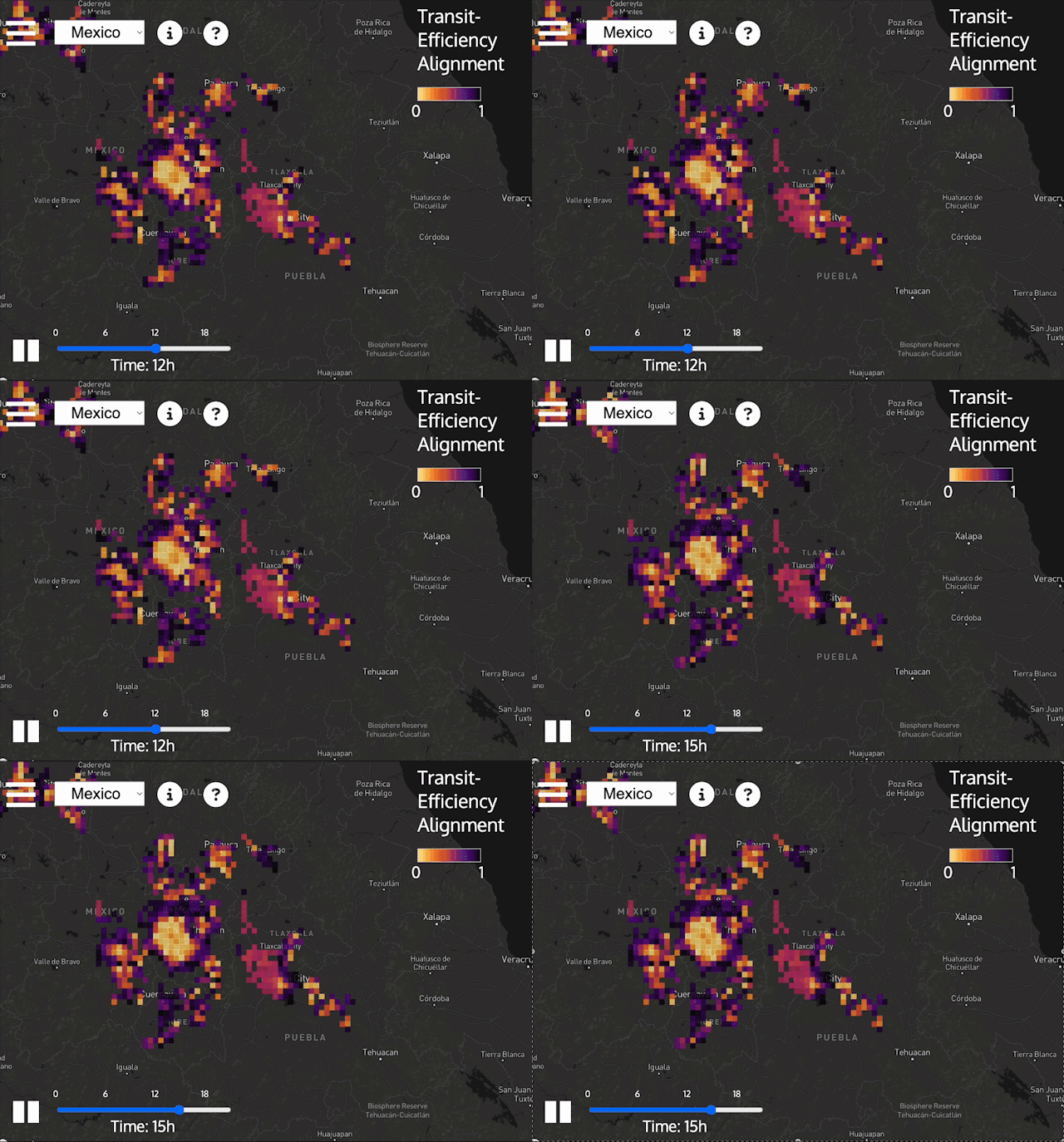
New preprint out: “Understanding Urban-Rural Disparities in Mobility Inefficiency for Colombia, Mexico, and India” with Nandini Iyer, Massimiliano Luca and Riccardo Di Clemente. Excited to share our latest research on urban and rural mobility inefficiencies. Determining the specific needs of urban and rural communities through mobility patterns is crucial, as it allows us to identify disparities and address the unique challenges faced by each area. Our study introduces a mobility inefficiency metric to evaluate how actual trip lengths deviate from the shortest possible paths, considering local road networks.
Our findings reveal key insights:
Urban vs. Rural Inefficiencies: Rural areas show greater inefficiencies, especially for longer trips and during late hours, highlighting gaps in infrastructure.
Transit-Efficiency Alignment: Colombian cities, such as Bogotá, display better alignment between transit access and mobility efficiency, likely due to bus rapid transit systems. In contrast, many Mexican cities show orthogonal alignments, suggesting suboptimal transit service or decentralised job opportunities.
Rural Inefficiency: For rural areas around New Delhi, Querétaro, and Bogotá, mobility inefficiency increases as distance from city centres grows in specific directions, suggesting that other key influences like land use patterns, natural barriers, and socioeconomic disparities may play a role.
Temporal Variations: Urban areas maintain stable inefficiency patterns, while rural areas see greater fluctuations, possibly due to shifts in trip purpose (e.g., increased leisure travel on weekends).
This work emphasises the importance of localised, context-aware infrastructure planning to bridge urban-rural mobility gaps.
Link to the full paper here: https://arxiv.org/abs/2503.01810
Explore city-level results: https://www.riccardodiclemente.com/projects/rural_urban.html
Thanks to Cuebiq and the World Bank for providing access to the data.
More info on our lab website