This page presents a comprehensive collection of research outputs from our study of UK mobility during the COVID-19 pandemic. The project includes two technical reports, two published papers, and supporting visualizations that document how the pandemic transformed human movement patterns across the United Kingdom.
COVID-19 UK Mobility Project
First Report: Analysis of Human Mobility in the UK During the COVID-19 Pandemic
April 9, 2020
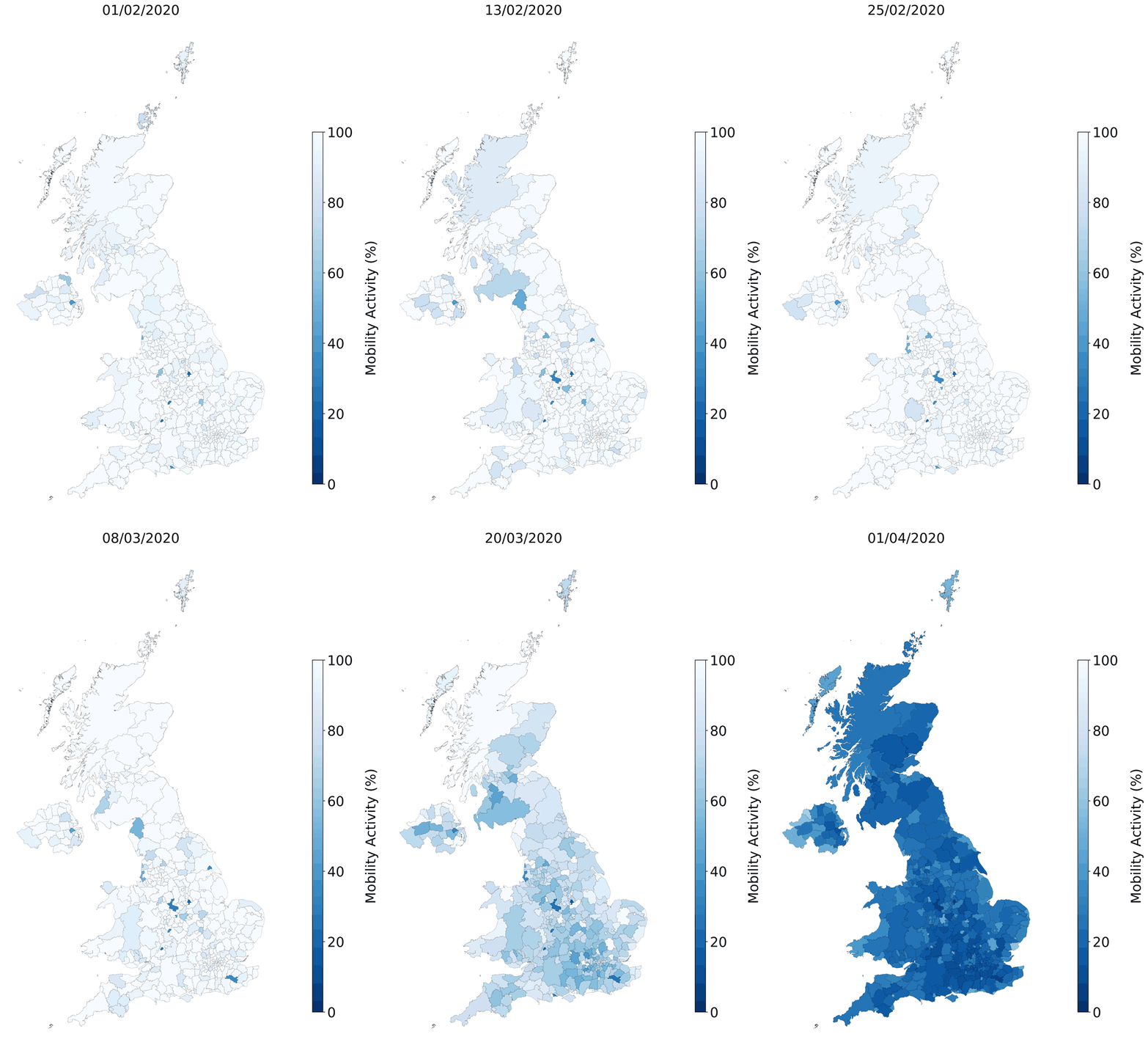
Our aim was to assess the effects of COVID-19 restriction measures on mobility patterns of people across the UK. These measures represented strong public health policies implemented to manage the pandemic's potential impact on the British population and the NHS. We analyzed changes in average mobility levels of anonymous mobile phone users across the country during different time periods, including periods when restriction measures were enforced by authorities.
Early March (Pre-restrictions): Before restriction measures were enforced, mobility levels decreased by approximately 10% compared to normal pre-pandemic levels, suggesting voluntary behavior changes in response to early pandemic warnings.
Mid-March (Work from home advisory): After people were encouraged to work from home and reduce travelling, mobility levels dropped by about 50% compared to before the pandemic—a dramatic shift demonstrating significant compliance with advisory measures.
Late March onwards (Lockdown): From March 24th, the UK entered a state of lockdown with only essential travelling allowed. This led to a reduction of approximately 70% in mobility levels—the most severe restriction of movement in peacetime British history.
Geographic consistency: Mobility levels dropped consistently across all areas of the UK following lockdown measures, indicating widespread compliance regardless of regional differences.
Second Report: Socioeconomic Aspects of Mobility Patterns
June 4, 2020
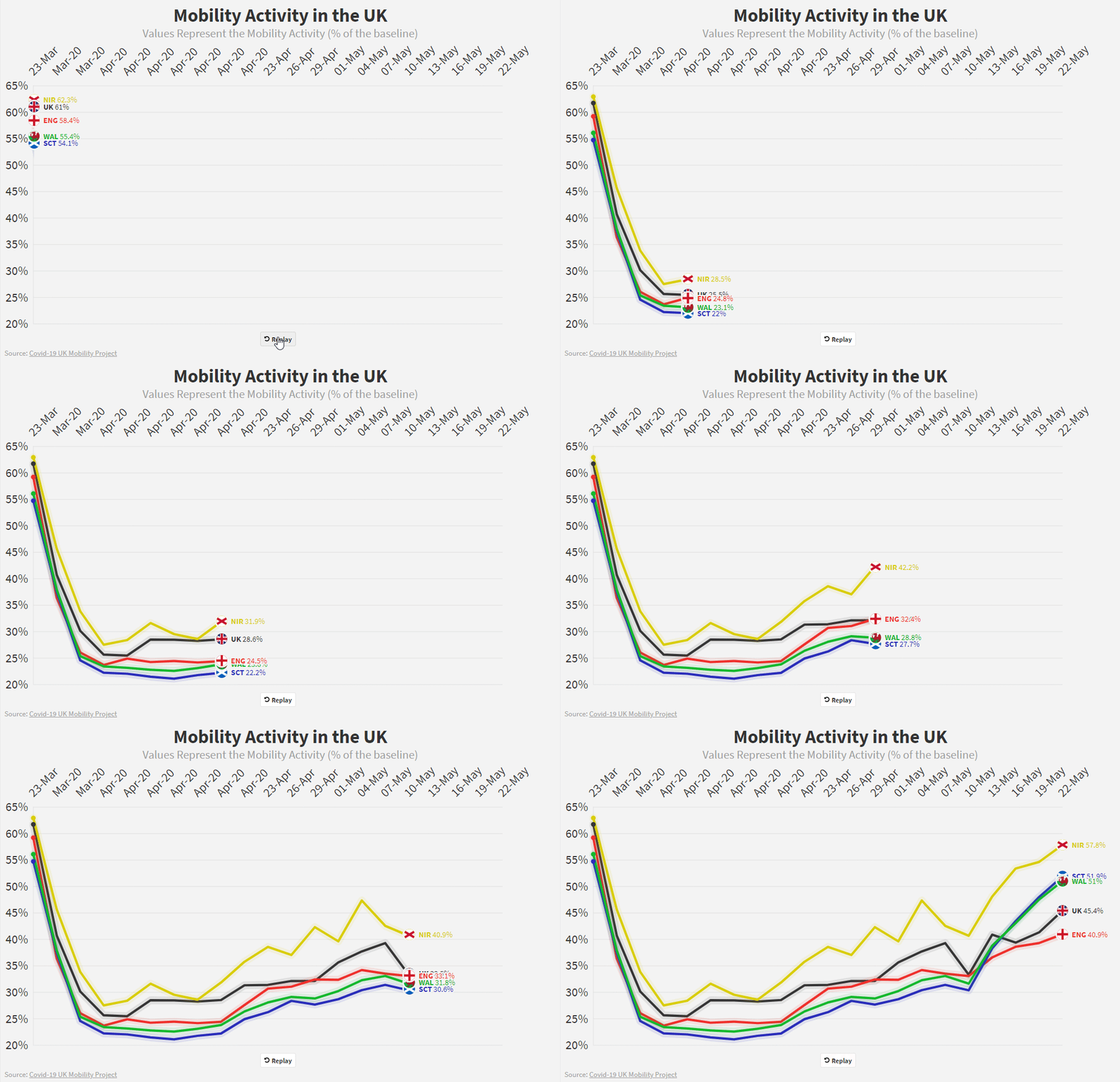
Lockdown measures affected people's lives at various levels. The debate about when they should start and end involved considerations of age, health risk, and the importance of labor for society (key workers). In certain developing nations, this became a debate between health issues (lockdown) versus economic survivability (returning to work).
Some world leaders defended "vertical social isolation" to enable people in low-income classes to earn a living and avoid further suffering from loss of income. Although these policies were not officially implemented in the UK, we explored the de facto effect of lockdown policies on different social classes across several UK regions.
Beyond regional differences, we investigated how mobility restriction measures and partial lockdown affected populations from different socioeconomic groups according to the Office of National Statistics Socio-economic Classification (SEC). This analysis revealed significant disparities in how different social classes experienced the pandemic restrictions, with clear implications for equity in public health policy.
Changes in the Time-Space Dimension of Human Mobility
Nature Human Behaviour, 2023
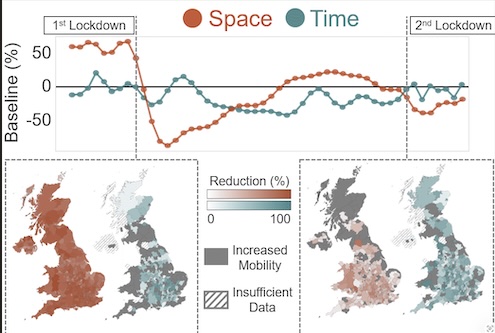
Socio-economic constructs and urban topology are crucial drivers of human mobility patterns. During the COVID-19 pandemic, these patterns were fundamentally re-shaped in their two main components: the spatial dimension (represented by daily traveled distance) and the temporal dimension (expressed as synchronization time of commuting routines).
Leveraging location-based data from de-identified mobile phone users, we observed that during lockdown restrictions, the decrease of spatial mobility was interwoven with the emergence of asynchronous mobility dynamics. People not only traveled less, but also traveled at different times—the synchronized rush hours that characterized pre-pandemic urban life became much more diffuse.
When restrictions were lifted, the recovery of these two dimensions proceeded at different rates. The spatial dimension recovered faster than the temporal one—people returned to traveling similar distances before re-establishing synchronized commuting patterns. Recovery patterns varied significantly by urbanization level and economic stratification: rural and low-income areas experienced more significant disruption in the spatial mobility dimension, while urbanized and high-income areas showed greater disruption in the temporal dimension.
Economic Complexity and COVID-19 Outcomes in UK Local Authorities
SSRN, February 2022
COVID-19 outcomes differ substantially according to socio-economic indicators. In this study, we identified a specific structure to these differences among UK local authorities: localities with a lower Economic Complexity Index (ECI) registered significantly higher COVID-19 cases and deaths.
We demonstrate that the ECI is a significant predictor of people's movements during the pandemic. Mobility declined in high-ECI localities during restrictions, but remained elevated in low-ECI places where a higher proportion of people have high-risk jobs more likely to lead to virus transmission. Workers in these areas—often in essential services, manufacturing, or manual labor—had less flexibility to work remotely or adjust their routines.
These findings reveal how local economic structures fundamentally shaped people's pandemic experiences. Areas with simpler economies and less diverse employment opportunities faced a double burden: higher exposure risk due to necessary mobility, and poorer health outcomes.
Talks and Video Presentations
Lightning Talk @ The Alan Turing Institute - Towards Urban Analytics 2.0
Final paper presentation discussing the time-space dimension findings
Discussion on Main Results of First Report
YouTube discussion covering the initial mobility analysis findings
Research Metrics (Main Paper)
Altmetric Attention
Citations
References
COVID-19 is linked to changes in the time-space dimension of human mobility
Nature Human Behaviour, 7, 1729-1739 (2023)
First Report: Analysis of human mobility in the UK during the COVID-19 pandemic
Technical Report (April 2020)