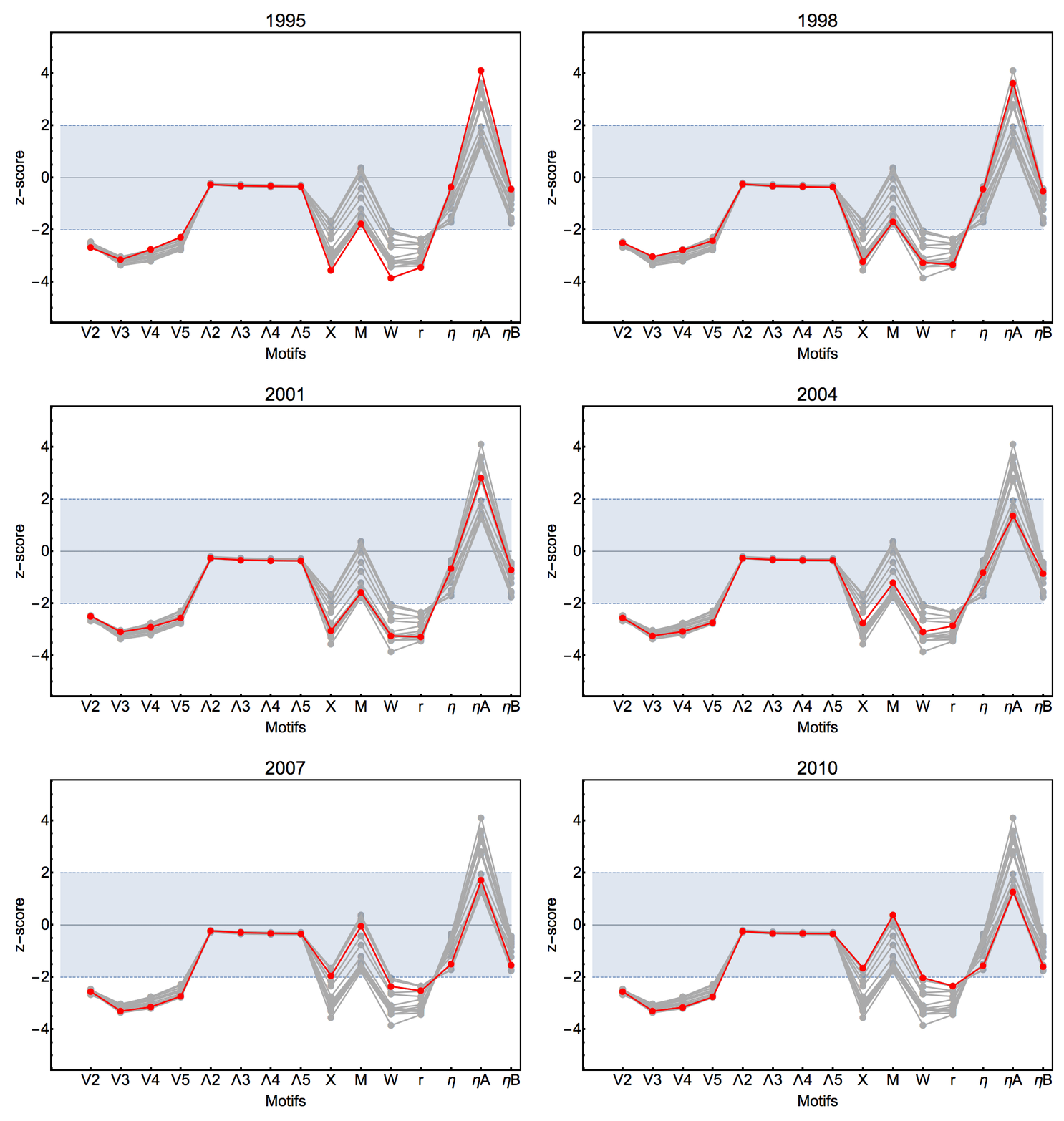
Remarkably, our analysis reveals that the most robust signals of the impending 2007 crisis emerged from the trade activity of developing countries, particularly within the most volatile sectors. This finding challenges conventional wisdom that focuses crisis monitoring primarily on developed economies and core financial sectors.
Developing countries often serve as early indicators of systemic stress because they tend to be more sensitive to global economic conditions. Their export sectors—frequently concentrated in commodities and manufacturing—respond more rapidly to shifts in global demand and financing conditions. The concentration of their trade in volatile sectors amplifies these signals, making them particularly informative for crisis detection.
This discovery provides crucial guidance for more effective monitoring of the global economy. Rather than focusing exclusively on major financial centers and developed markets, effective early warning systems should pay close attention to trade patterns in developing economies and volatile sectors. These peripheral actors may provide the clearest signals about systemic stress building in the global economic network.
Our findings suggest that network-based monitoring tools, properly calibrated to the most sensitive indicators, could provide valuable lead time for policy interventions. By tracking diversification patterns and structural changes in trade networks—particularly among developing countries—regulators and policymakers could gain earlier warnings of developing systemic risks.