Big Data Fusion to Estimate Urban Fuel Consumption: A Case Study of Riyadh

Riyadh fuel consumption analysis visualization

Falling oil revenues and rapid urbanization are putting significant strain on the budgets of oil-producing nations. A direct and effective way to appropriate funds is to reduce fuel consumption by reducing congestion and unnecessary car trips. While fuel consumption models have started to incorporate data from ubiquitous sensing devices, there is an opportunity to develop comprehensive models at urban scale leveraging sources such as Global Positioning System (GPS) data and Call Detail Records.

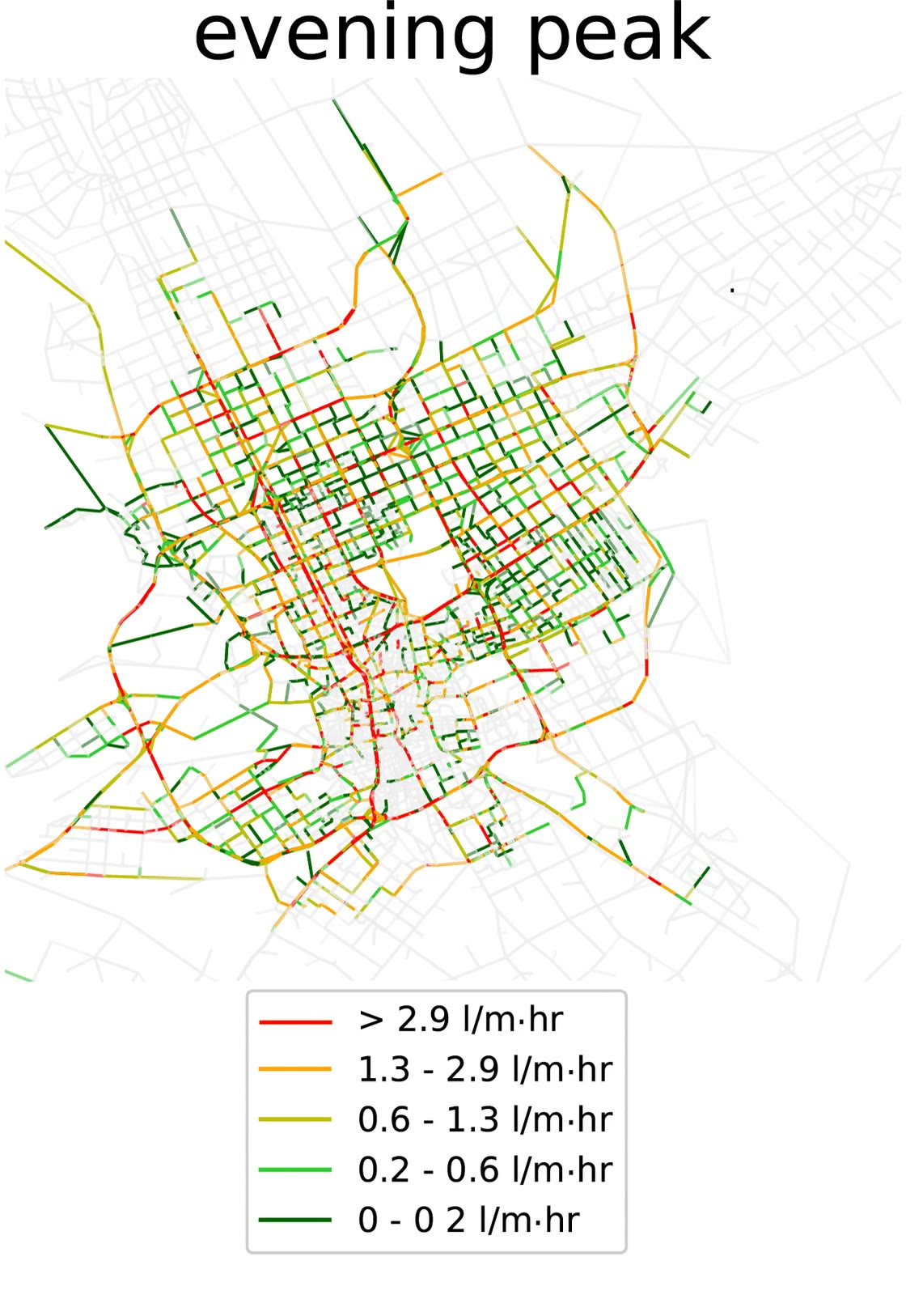
In this research, we combine these big data sets in a novel method to model fuel consumption within a city and estimate how it may change under different policy scenarios. We calibrate a fuel consumption model that can be applied to any car fleet fuel economy distribution and apply it specifically to Riyadh, Saudi Arabia—a rapidly growing city facing significant transportation challenges.

Speed-Based Model and Policy Analysis

Our model, based on detailed speed profiles derived from GPS trajectory data, is used to test the effects on fuel consumption of reducing traffic flow through two strategies: random reduction and targeted reduction of the most fuel-inefficient trips in the city. The estimates considerably improve upon baseline methods that rely only on average speeds, demonstrating the substantial benefits of information added through GPS data fusion.

The key innovation lies in using high-resolution speed profiles rather than average speeds. Traditional models that rely on average speeds miss crucial information about acceleration, deceleration, and stop-and-go traffic patterns—all of which significantly impact fuel consumption. By incorporating detailed GPS trajectories, our model captures these dynamics and provides much more accurate fuel consumption estimates.

The results show that targeted interventions focusing on the most fuel-inefficient routes can achieve significantly better outcomes than random traffic reduction. This finding provides actionable insights for urban planners and policymakers who must balance economic constraints with environmental and quality-of-life goals.

The presented method can be readily adapted to measure emissions, making it a versatile tool for addressing multiple urban challenges. The results constitute a clear application of data analysis tools to help decision-makers compare policies aimed at achieving both economic and environmental goals in rapidly urbanizing regions.

Research Metrics

Altmetric Attention

Citations

References

Kalila, A., Awwad, Z., Di Clemente, R. & González, M.C.

Big Data Fusion to Estimate Urban Fuel Consumption: A case study of Riyadh

Transportation Research Record, 2672(40), 215-225 (2018)

Python implementation of the fuel consumption model

Code Repository - Riyadh Fuel Consumption Analysis